Dominion Wildlife Service
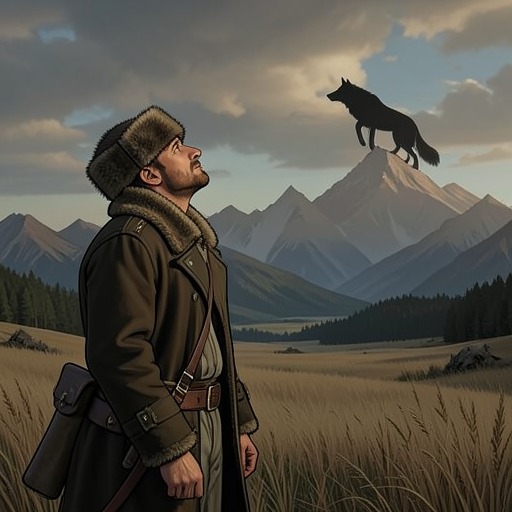
Never Cry WolfThe Dominion Wildlife Service is the federal agency that hired Farley Mowat and sent him into a politically charged investigation of wolves. Its place in the book is defined by a tension: it employed a biologist interested in observing living animals, yet its work unfolded within an administrative culture responsive to political demands for action against wolves.
Recruitment and Scientific Work
Farley Mowat’s appointment followed an uncertain start to his professional life. While his university contemporaries moved into specialized research posts, he remained drawn to studying animals in their natural surroundings rather than limiting his work to laboratory material or statistical analysis. He concluded that he had little to offer in the prevailing biological job market and expected to end up in government service.
The Service’s summons made that expectation concrete. It hired him at a salary of $120 a month and ordered him to report to Ottawa at once. He complied, despite his misgivings about the obedience demanded by scientific hierarchies. The appointment placed a field-minded biologist inside a large government organization whose procedures, as he soon discovered, differed sharply from the direct study of animal life that had attracted him to biology.
Office Hierarchy and Administrative Culture
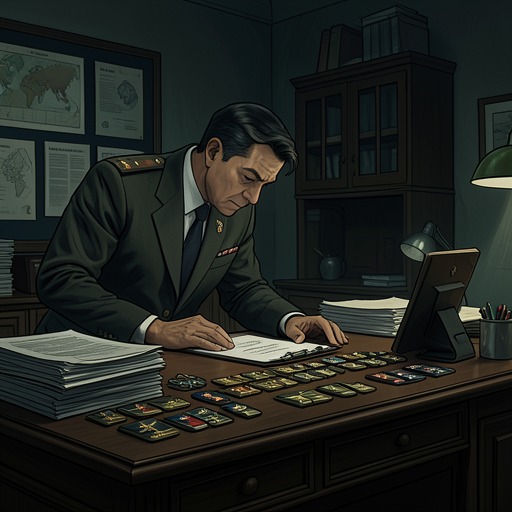
On arriving in Ottawa, Mowat presented himself to the Chief Mammalogist, a former schoolmate who had become, in Mowat’s view, thoroughly absorbed in professional dignity. The Service then put its new employee through several days of orientation. Mowat found himself moving among officials occupied with data and memoranda; rather than inspiring devotion to his post, the process made the bureaucratic hierarchy seem even more rigid than the scientific one.
The organization’s rank-consciousness appeared in small but telling procedures. When Mowat addressed the Deputy Minister as “Mister,” his escort hurried him away and privately warned him that the proper form was “Chief,” or, alternatively, “Colonel.” The episode shows the formal deference expected within the governmental structure in which the Service operated, and the distance between its internal rituals and Mowat’s practical, field-oriented outlook.
The Wolf Inquiry and Political Pressure
The Service’s chief presented the wolf problem as a matter of national importance. In his briefing to Mowat, he said that the department had received thirty-seven memoranda from Members of the House of Commons in a single year, reflecting constituents’ concerns. He described complaints from Fish and Game clubs and business interests, including ammunition manufacturers, and reported the claim that wolves were responsible for hunters returning with fewer deer.
The briefing also exposed the political risk of offering an explanation that contradicted that account. The chief recalled that his predecessor had told the Minister that hunters outnumbered deer by about five to one. After the Minister repeated the explanation in the House of Commons, Members shouted him down; three days later, the predecessor retired. The Minister then issued a public statement promising a full-scale investigation into the alleged destruction of deer by wolves. In the chief’s account, the inquiry thus began not with an agreed scientific diagnosis, but amid public pressure, political confrontation, and an official commitment to act.
Government Policy and the Service’s Context
The book sets the Service’s investigation against a broader government-supported campaign against wolves, while distinguishing that wider policy from actions specifically attributed to the Service. In late 1972, Quebec’s Minister of Fish and Game announced a contest for hunters from Canada and the United States, with a target of 5,000 dead wolves, despite contrary advice from the Minister’s own biologists. At the federal and provincial levels, wolf bounties of $10 to $30 were offered. Mowat describes the bounty as a subsidy to trappers and traders when fur prices were depressed.
One reported example conveys the scale and collateral effects of bounty-driven killing: a trapper along the Manitoba–Keewatin boundary collected bounty on 118 wolves in one winter, 107 of them young animals. According to Mowat, the trapper used strychnine over a large area, killing foxes, wolverines, and other predators as well; wolves were worth $20 each that year. This account places the Service’s inquiry within an institutional landscape where official concern about wolf predation coexisted with incentives and practices that caused broader wildlife losses.
Government involvement in wildlife management could also serve commercial hunting. A provincial tourist bureau had developed organized caribou safaris for visiting trophy hunters, sometimes using government-owned aircraft; the hunters paid $1,000 each and were promised a set of antlers. Mowat describes aircraft being used to gather caribou into a herd so hunters could shoot from the plane, with government officials presumed to approve the arrangement. These were not identified as Dominion Wildlife Service operations, but they sharpen the book’s central institutional contrast: government authority could support wildlife investigation while also accommodating policies and enterprises driven by hunting interests.